Author Archive | James T. Verrill

Icelandic Chicken Eggs arrive on the Ides of March

DSCN0783

Icelandic Cock  –  Mack Hill Farm

I had the pleasure and the privilege of visiting Mack Hill Farm today to see their flock and acquire my Icelandic Chicken hatching eggs!   Mack Hill Farm is a great mixture of tall trees and open spaces. When I arrived the 90 some Icelandics were scattered around in groups scratching through the leaves in the woods,  each cock with his harem.  One hen still roosting high in a large pine tree.

DSCN0779

DSCN0777

DSCN0780

I love the varied colors.  I am hoping that my hatch will include Peach  and Black and White Speckled birds.  What ever hatches they will be a marvelous mixture of color and comb varieties.  This breed which goes back to the Vikings is the perfect solution for my “need”  for colored chickens.

DSCN0784

Icelandic Chicken Eggs

Four of the six dozen eggs I brought home to hatch.  As you can see the Icelandics lay a white egg with occasional hints of beige. Very similar to the White Chanteclers! This may mean I keep a small mixed flock off dark egg layers so I can continued to sell mixed hues to our egg customers.

DSCN0785

Placed in the Incubator on the Ides of March

Yes, we hatch in the dining room:)  These should be pipping on April 3rd as I was told today Icelandics hatch out in 19 days.  Will post pictures of the hatch in April.

Additional eggs later this season from Muddy Hoof Farm –  way Down East!

DSCN0925[1]

2 Days old here.  Hatched April 5, 2013.  38 Icelandic Chicks.

7

Think of all the beauty still left around you and be happy !

I am aware of the fact that too many people fail to see the real beauty in their immediate world. There is beauty around us every moment of every day. We just need to take time to see and appreciate it. One of the best ways is through the eye of a camera! Try it. Take you camera and look at your own world. The world that is right around you. Inside or out, beauty is every where. Seeing and appreciating it will make things much better in this difficult world we find ourselves living in.

DSCN0754[1]

Earl’s Shed

Earl is gone now. His place is empty and we mow the yard and let out poultry graze there so the place does not look unused and abandoned.  His daughters are in Florida.  Earl was the first person we met when we came to look at the house in 2003.  We went into his shop to introduce ourselves as prospective neighbors and to ask if he knew where the property line was and was he happy with it.

DSCN0646[1]

Earl’s Shop

Earl was feeding peanuts to a chipmunk that day we first met.  He walked us out and showed us the survey stakes. He was happy with them so we were too. Earl was a good man. Earl was a good neighbor. His shop was here before we bought our home. We bought our home knowing that Earl ran his shop and the yard filled up in the non-winter seasons.  We planted a “wind break”. We defended Earl’s right to do as he wished with his property. Earl was a good neighbor.  We miss him.

DSCN0636[1]

The perception of beauty is a moral test. – Henry David Thoreau

DSCN0759[1]

Let me share some of the beauty that Abigail and I see every day that we walk. Hopefully it will encourage you see see that beauty that is around you all the time.

DSCN0656[1]

Never lose an opportunity of seeing anything beautiful, for beauty is God’s handwriting. – Ralph Waldo Emerson

DSCN0744[1]

In nature, nothing is perfect and everything is perfect. Trees can be contorted, bent in weird ways, and they’re still beautiful. – Alice Walker

DSCN0750[1]

Beauty is not caused. It is.Emily Dickenson

DSCN0269[1]

Nature is painting for us, day after day, pictures of infinite beauty if only we have the eyes to see them. – John Ruskin

DSCN0687[1]

I still find each day too short for all the thoughts I want to think, all the walks I want to take, all the books I want to read, and all the friends I want to see. The longer I live, the more my mind dwells upon the beauty and the wonder of the world. – John Burroughs

DSCN0734[1]

Beauty in distress is much the most affecting beauty.Edmund Burke

DSCN0758[1]

Everything has beauty, but not everyone sees it.Confucius

DSCN0260[1]

Our task must be to free ourselves… by widening our circle of compassion to embrace all living creatures and the whole of nature and its beauty. – Albert Einstein

DSCN0317[2]

Beauty is life when life unveils her holy face.Kahlil Gibran

DSCN0700[1]

Beauty is the experience that gives us a sense of joy and a sense of peace simultaneously.Rollo May

DSCN0699[1]

Everybody needs beauty as well as bread, places to play in and pray in, where nature may heal and give strength to body and soul. – John Muir

DSCN0634[1]

A thing of beauty is a joy forever.John Keats

The beauty around me is endless – Take time to see the beauty around you.

7

Cabin Fever – The Robins Keep on Singing!

Cabin1

Cliff Ice on my walk today

“Cabin Fever” is not something I usually experience!  I love winter as long as I have access to a wood heat source to “warm my bones”.  Wood stove heat is the only heat that penetrates my body and truly warms me on cold winter days.  So why am I experiencing bouts of what I believe is “Cabin Fever”  My personal assessment indicates it is a reaction to the roller coaster winter we have had!  The extreme swings in temperature from above freezing to below freezing, the swings in snow cover, that while mild compared to friends and family south of me, never the less have frustrated me!  The lack of snow cover protection threatens to harm my gardens and plants.

I work to heighten my spirits by preparing to start the incubator and seeds. The peeping of newly hatched chicks and the seedlings breaking through the earth are both indicators of Spring and the new cycles of life.

I look at pictures from other seasons and know that I,  we,  will be cycling though them again.

DSCN0634

The Pussy Willows are out and have been for weeks!  They brave the winter weather swings and remind me that Spring is near!

DSCN0635

The snow recedes and reveals the dead grass that will soon turn green with new life.  The chickens find these snowless areas, lay on their sides and bask in the warmth of the sun. They preen and strut and execute the courtship that will result in fertile eggs for this years hatching of a new generation.

On my walk with Abigail today, the three mile walk that reaped these photos, I found myself thinking about a Spring 16 years ago when an April blizzard had the robins presenting me with a valuable life lesson.  Nature teaches us as she wraps us in her seasons.  I searched back to find an article I had written “The Robins Keep on Singing”  and I lift a segment from it to end this entry.

An entry that reminds me to keep on singing as I wait for Spring!

I knew I would have to walk the last quarter mile of my mile long driveway due to the mud. I parked at the turnaround just outside my gates. It was snowing — a wet, soft, gentle snow that clung to every branch. I lingered there, listening to classical music, writing in my journal, savoring the beauty and the peacefulness of the night, the woods, the snow, the world around me, life.

Suddenly I thought: “I do not want to be in a building tonight. I want to stay out here.” That is exactly what I did. Leaning the seat back, I went to sleep.

I awoke the next morning to a truly spectacular, truly beautiful, truly peaceful, truly memorable, white, snow covered world — trees, snow, woods, birds, me —–ethereal beauty and peacefulness. As I greeted the new day, appreciating the connectedness of all, I realized that this spectacular, snow covered world, while lifting my spirits, was a severe hardship to all the robins who had returned the week before. Yet, despite the hardship, despite the difficulty,”the robins keep on singing”.

A powerful lesson delivered by the natural world at a point in my life when the power and trueness of that statement, “the robins keep on singing”, can help me keep a proper perspective on events in my life.

“The robins keep on singing” has been added to the list of phrases I use to help myself. Two of my other favorites from the list are: A line from a poem by the Isles of Shoals poetess Celia Thaxter, ” The sunrise never failed us yet” and a line by I know not who, “The earth turns toward the morning”.

The first quote reminds me that light always follows darkness, without fail, and the second quote keeps me aware that each day is a new beginning, that whatever happens there is always a new day dawning, an opportunity for a fresh start.

I offer these for you to use as you ponder the “why for alls” and the “where for alls” of your life.”

DSCN0624

And so I rejoice in the mud, which follows the snow and precedes the green awakening of my, of our, world.  May this find you rejoicing in nature’s cycles too!

2

VANDANA SHIVA: Traditional Knowledge, Biodiversity and Sustainable Living

Vandana Shiva

“If you are doing the right thing for the earth, she’s giving you great company.”
Vandana Shiva

Normally this site is for me to show and share our own efforts and journey towards maximizing our self sustainability level.  Knowing we will not reach 100%, we strive to maximize!

Often it is beneficial to step outside our own society/country for honest assessments of the situation we find ourselves in as citizens of the Earth!

I am posting two videos here for your contemplation.  The first is 16:40 minutes and the second is 38:47 minutes.  WORTH every second!

VANDANA SHIVA: Traditional Knowledge, Biodiversity and Sustainable Living

 and

Dr. Vandana Shiva on Just Food

I invite you to watch these, contemplate their unsettling message and share!

I leave you with this quote :

“[How do I do it?] Well, it’s always a mystery, because you don’t know why you get depleted or recharged. But this much I know. I do not allow myself to be overcome by hopelessness, no matter how tough the situation. I believe that if you just do your little bit without thinking of the bigness of what you stand against, if you turn to the enlargement of your own capacities, just that itself creates new potential. And I’ve learned from the Bhagavad-Gita and other teachings of our culture to detach myself from the results of what I do, because those are not in my hands. The context is not in your control, but your commitment is yours to make, and you can make the deepest commitment with a total detachment about where it will take you. You want it to lead to a better world, and you shape your actions and take full responsibility for them, but then you have detachment. And that combination of deep passion and deep detachment allows me to take on the next challenge, because I don’t cripple myself, I don’t tie myself in knots. I function like a free being. I think getting that freedom is a social duty because I think we owe it to each not to burden each other with prescription and demands. I think what we owe each other is a celebration of life and to replace fear and hopelessness with fearlessness and joy.”  Vandana Shiva

added link  May 25, 2013:

Fighting the Corporate Hijacking of Seeds

1

Growing Mushrooms at Fayrehale Farm — Have *You* Grown Mushrooms?

Mushroom-Logs

We are ready to add growing mushrooms to our food production exploits here at Fayrehale Farm , the home of Fayrehale Chantecler Chickens.

We have done some reading and feel the decision is with plug seeded logs outside under some conifers and/or button mushrooms in the cellar.  Our 1840 Vermont Village home has a nice, dark, dirt floored, stone walled cellar.

I look at this page as not only a way to share our knowledge and experiences with you but as a way to gain from your knowledge and experience as well!

I look forward to hearing from those of you who have successfully grown your own mushrooms!   Thanks:)

Mushrooms-Button

5

Raised Garden Beds – Their evolution……

In late 2010 after I left Borders and moved to our home in Vermont full time, we decided to create raised beds.  We had an open and sunny space in the side yard.  I figured with my back, life would be easier if I did not have to bend and reach to the ground.  My back has been helped and I have been kept moving and living life with Bowen Therapy provided for nearly a decade now by my Bowen Therapist William Kelley

raised beds 1

Ironically it was less expensive to buy the 2″ planks at a big box lumber yard that from the local sawyer we checked with for green hemlock!  Much less expensive!  DO NOT use any pressure treated products!  We went looking for 12″ wide and settled for 10″ wide as that was what was available and we needed to get the project underway.

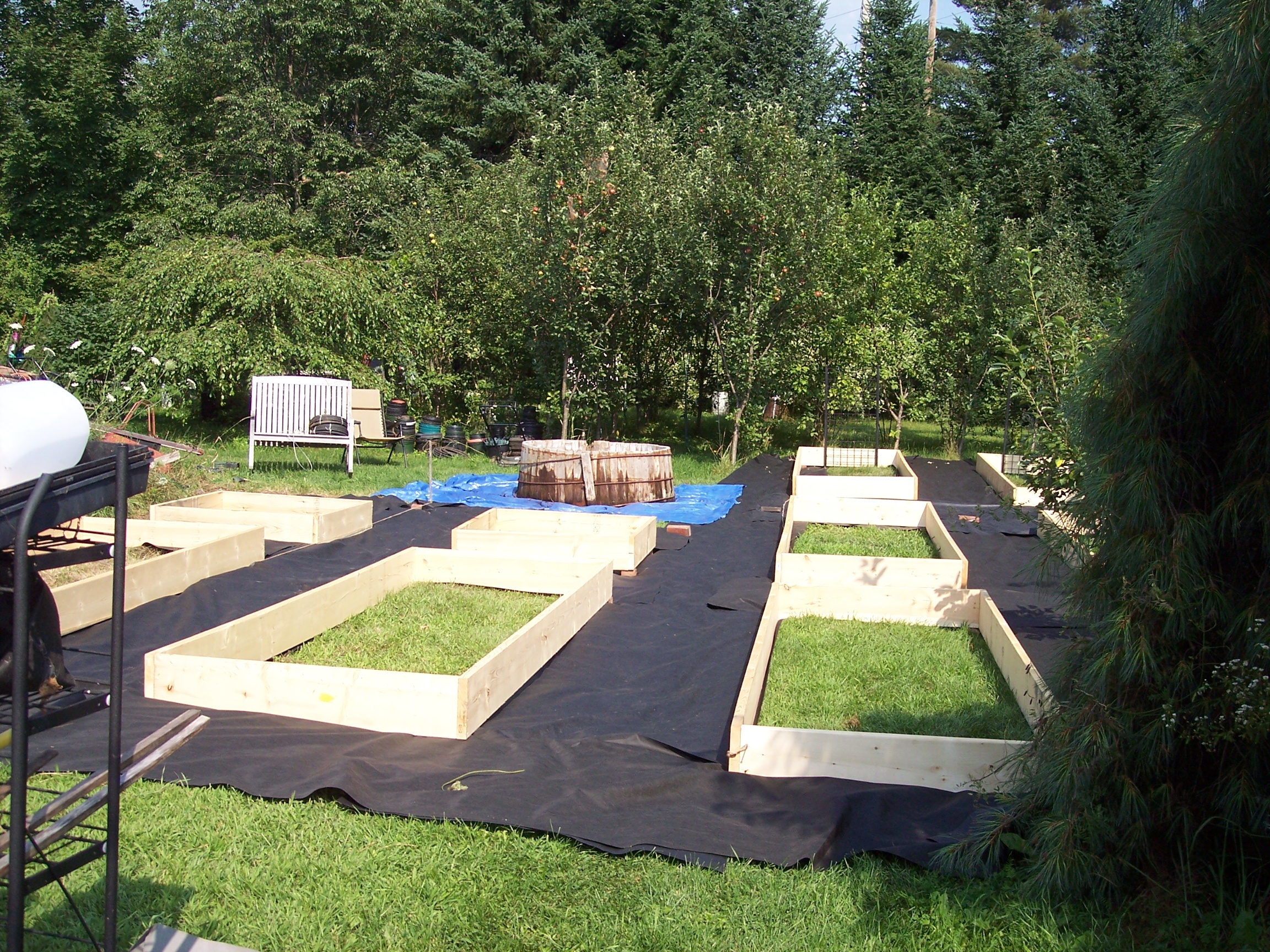
We constructed the “boxes” in the driveway. 4’x12’x 10″.  Nailed first and then screwed. Then we carried them out and positioned them.  This shows 7 of the 4’x12’s (the 8th is off to the right)  and  two 4’x4′. The aisles are 4′ wide.  Notice the Apple Arbor in the background.

RaisedBed2

Landscape fabric was laid in the aisles and tucked under the edge of the boxes.  You my want to skip this step.  We wanted the bottoms of the boxes uncovered so grass and roots would compost and worms could migrate up.

RaisedBed 3

We had top soil delivered and dumped in the driveway.  Tom, bless his heart, used a wheel barrow to fill the boxes.  I picked up composted cow manure from a local source and added that on top of the top soil  Boxes were covered with black plastic for the winter so they could “cook” and “work”.  Took the plastic off in the spring and found that a large rat snake had decided that curling up in the corner under the plastic was a nice way to warm itself:)

RaisedBed4

After we removed the black plastic winter covers we had a fresh snow. Poor Man’s Fertilizer ! Late snows are so called as they deliver nitrogen to the soil.

RaisedBed5

Snow has melted, rat snake has found a new home, apple arbor is budded, aisles have been covered with bark mulch and the beds have been turned by hand with a spade fork.

RaisedBed6

Planted and looking good.  It is amazing the difference the 10″ elevation makes!  Easy to bend, reach and work both sides.  We figure as I “mature” we can add 10″ levels and make 20″ tall and then when I am 90! 30″ tall.  When the sides decompose (7, 10?? year we will box around the outside with fresh planks and then the interior original frame continue to compost.

RaisedBed7

THEN!  we had the idea to make three “sets” into greenhouse hoop houses! We used PVC pipe and the same system on the side of the raised beds that we used when we constructed our much smaller Poultry Breeding Pens

Two 4’x12′ raised beds with a 4′ aisle means the hoops are 12’x12′

RaisedBed8

In the picture above you can see how we did the top of the arch. The Hoops are 18″ apart. Two 10′ pieces of 1″ PVC join at the PVC “T” connector. Pieces of PVC join the hoops and maintain the spacing along the top.

RaisedBed10

This shows how we framed the doors…  The uprights are connected to the outside hoops w/ electrical conduit clamps like were used at the bottom. Angled supports on either side and one back support on the side where the door hinges are.  We found screen doors on sale for $19  and picked up one for each of the three hoop houses. We could not build doors for that when you consider time and materials.  Doors were covered with 1″ chicken wire.  The back was framed similarly without the internal door support.

Raisedbed11

Because we planned to winter chickens in two of them we put 4′ tall  1″ chicken wire around the inside of the hoops and attached w/ plastic zip ties.

RaisedBed12

Composed cow manure placed over the beds.

RaisedBed13

A very generous layer of leaves on top of the cow manure.  Leaves are good for the garden as they are full of minerals and elements from deeper in the earth.  You can see here that we placed nest boxes in the back.

RaisedBed15

Greenhouse plastic applied.  Corners had not been finished when picture taken

RaisedBed16

The third hoop has two smaller hoops over the raised beds. Greenhouse plastic was then applied like the other two.  This is the hoop where we plan to master Four Season Gardening. We aren’t there yet but we will get there.  Spinach, kale, mustard and other hardy greens for fresh winter harvest.

RaisedBed17

Winter arrives,  The front hoop is where we are working to master winter greens. The back two house chickens seasonally.  We had one upright support in the center to start.  Then added two more so there there are three supports for winter to deal with wet snow loads with out me having to get up during a storm and clear the snow off!  Two come out in the spring. Only the center support stays and it is connected to the hoop w/ an electrical conduit clamp before the plastic cover was applied.

Chantecler Hoop

Our Chanteclers are using this hoop for the winter. You can see the three center supports. Middle one is permanent and the two on the ends are seasonal. All joined and stabilized by a 2×4 to serve as a roost in the two houses with chickens.

There you have it. They work well for us. You can modify, if you feel it necessary, and make work for you.

13

What is *Your* Favorite Winter Squash ?

squash1

We grow the traditional winter squashes —  acorn, butternut and buttercup, all of which we get from High Mowing Organic Seeds

This year we will add:

Squash2GaleuxD_EysinesSquash

Galeux D’ Eysines

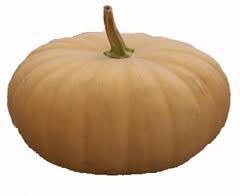
A beautiful heirloom squash. This flattened, round 10-15 lb fruit has a gorgeous salmon-peach colored skin that is covered with large warts! The sweet orange flesh is used in France for soups and also can be baked. A nice French heirloom.

Squash3Turks Cap or Turban

A beautiful squash striped in red, orange, green and white. A very old variety from France (pre-1820). Fine thick orange flesh; good sized fruit. Unique.

squash4jpgLong Island Cheese

A longtime favorite on Long Island very popular for pies. Flat, lightly ribbed fruit look like a wheel of cheese with buff colored skin. A very good keeper of excellent quality; 6-10 lbs. each; a beautiful heirloom variety.

squash5

Blue Hubbard

Huge, teardrop-shaped fruit weigh 15-40 lbs and have sweet, fine-grained, golden flesh. Great for baking, pies, and soup. The hard, blue-gray shell helps these keep for long periods in storage. Gregory Seed Company introduced this fine New England variety in 1909, and Mr. Gregory considered this his best introduction.

These four less traditional winter squashes will be in our 2013 garden and the seeds came from Baker Creek Heirloom Seeds

SO!  What is *Your* Favorite Winter Squash?  Let us all know what you grow and how well it stores.  Our goal here is to reach the point where we grow all the squash we will need for a year…… and we like and use a lot of squash!

1

Poultry Breeding Pens

BF3

We have just experienced the Blizzard of 2013.  We are shoveled out and all the birds are fine.  I can’t stop thinking about the approaching breeding season!  I am resisting and controlling all urges to start the incubator!  That has to wait until March when we do the fertility check prior to shipping hatching eggs and prior to hatching the chicks we will ship.Those lucky chicks from the fertility check will live a good live and die a fast and humane death so they can feed us next year.

In the mean time, there has been interest in our small breeding hoop pens.  They are easy and cost effective to make, great to use for breeding pairs or groups and moveable. They can work for poultry other than chickens  and modified to any size you need.

BF1

This picture gives you a good view of the frame work. We made a 4’x6′ box with 2″x10″ boards.  As you can see a piece of strapping is added to the 6′ sides. Electrical conduit clamps are added above the strapping (which serves as a stop) to receive and hold the 3/4″x10′ PVC pipe that we used for the hoops.

BF2

We made six units and moved them into place behind the Apple Arbor and in back of the tent where we sleep three seasons of the year.  We placed a piece of strapping along the top of the hoops and used plastic ties to hold the hoops evenly  spaced. The we put 1″ chicken wire over  sides and back.  Again plastic ties held the wire to the hoops. If using 3′ wire it will take 3 pieces (6′ wire will take 2 pieces and join with an overlap at the top).  Start with the first piece on top. This way your side pieces, which will overlap UP over top piece (predator can’t nose in) and go down below the strapping used as a hoop stop.  NOTE: Depending on your situation you may want to use hardware cloth around the bottom instead of or over the 1′ chicken wire.

BF4

Rain Cover: Once wired, we used an inexpensive blue tarp to cover the back half of the pen. It wraps around the back but does not totally close the back so there is air flow in the summer.  These pens back up against mature conifers so the opening in the tarp cover in the back is shaded.

Perch: As you can see, we nailed a 2×4 upright to each side and placed a 2×4 across for the perch.

Door: You may not like what we did for the door and you can be as fancy as you like when placing door on open end.  We took a 4’x4′ piece of 1/2″ plywood ( 2 pens to a sheet) secured the bottom in a groove made by nailing a piece of strapping to the top of the 2″x10″ front base. Be sure to leave a little more than a 1/2″ space.  The bottom of the plywood front sits in the groove (can’t be pushed out) and then we added screw eyes (bolt style) near the top of each side so we could use bungee cords to secure  to a hoop.  The picture above shows this and as I said be as fancy as you wish if you don’t like our system! It works well for us.

Cost: There is no point in my discussing costs. We are entering our third season with these pens.  You can easily make a materials list and price the materials in your area. I know they are the most reasonable and versatile system we could come up with.

As an aside: We have kept yearling peacocks successfully in one through the winter by using  greenhouse plastic to cover all but the front (closing off the back).  We then places two old quilts over the top (not all the way down the sides) and let what ever snow falls add to the insulation.  This has worked in Vermont with spells of subzero weather.

Good luck with your 2013 season. We are looking forward to ours!

ADDENDUM

I have received numerous requests, on here and through other electronic media, to provide pictures of the door system we are using on our breeding pens. I will add three pictures and hope they provide the necessary information.

door1

Not the best day for taking pictures as everything is wet!  Look carefully and you can see the scrap of strapping we used..  10-12″ ….there is a matching piece on the other side (3rd picture). One could put it all the way across but we saw no reason to. Slight warp shows some corn. This pen is wintering 2 young peacocks.

Door2

Neighboring pen that we are not using this winter. Plywood has been set aside. I took the snow off the scrap of strapping  and left the snow on the front baseboard.

Door3

If you look closely (sorry wet day so all wood is dark)at the top of the picture, you can see the end of the far side “stop” .

We also had inquiries about opening the pen.

To feed and water, I open the right side either by sliding or by lifting up and over the “stop”.  This allows me to feed and water alone.  If they won’t lay eggs up front I use a small net to retrieve them.

Major work, like moving birds etc., requires the help of a second person to “man the door”.

DSCN1024[2]

April 20-21, 2013 we added this hoop pen

This past weekend we changed plans and rather then build another wooden coop, we hooped the floor platform creating a 4×12 pen that has been designed so we can slide a divider between the pair of closely spaced center hoops.  Divided we would have another pair or 4×6 breeding pens.  WE PREFER frames on the ground as the ones first discussed above have.  We already have the platform  and so we used it.

18

Thinking About Tomatoes!

heirloom_tomato

Tomatoes rank at the very top of the list of what I enjoy most from the garden!  I can eat them like apples but la piece de resistance is tomato sandwiches so thick and juicy that I have to eat them over the kitchen sink or outdoors!  I could live on tomato sandwiches morning, noon and night for the entire tomato season!

Thus, I am thinking about tomatoes.  I spent last night perusing the Tomato Growers catalog AFTER checking out their GMO statement!  Inside cover: ” While we never sold very many treated seeds, we now only sell untreated seeds. In addition, all of our seeds are not genetically modified”

So here are the tomatoes I have marked to try!  One can never plant too many tomatoes!

Tomato Gregoris Altai

Gregori’s Altai

A Siberian variety that originated in the Altai Mountains on the Chinese border. Tall plants are heavy producers of 8 to 12 oz. pink-red beefsteak tomatoes. The flavor is sweet yet acid and just delicious, with harvests continuing over an incredibly long season. Indeterminate. 67 days.

Tomato Stupice

Stupice

From Czechoslovakia, this is an extremely early cold-tolerant tomato that bears an abundance of 2 ounce flavorful and sweet tomatoes. This variety has become a garden favorite for its earliness, productivity, and truly wonderful taste. Indeterminate. 52 days.

Tomato Costoluto Genovese

Constoluto Genovese

Italian heirloom tomatoes. Large, deep-red, juicy tomatoes are deeply ribbed but fully flavored and absolutely delicious. This variety is hearty and does well in hot weather, but continues to produce even when the weather turns cool. Indeterminate. 78 days.

Tomato Russian Rose

Russian Rose

This Russian heirloom variety is aptly named as it bears fruit as pretty as a rose. The tomatoes are large rose-pink globes with excellent, sweet, full tomato flavor. The average size is usually about 12 ozs. with meaty flesh. Expect a good sized crop of these top-quality tomatoes. Indeterminate. 78 days.

Tomato Amish Paste

Amish Paste

Amish heirloom variety produces paste-type fruit with an oblong oxheart shape. 8 ounce tomatoes are solid with an outstandingly good, sweet flavor. Indeterminate. 85 days.

Tomato Anna Russian

Anna Russian

Heirloom seed handed down to an Oregon woman from several generations of her family, along with the story that it came from a Russian immigrant. Large, juicy pinkish-red heart-shaped tomatoes consistently weigh 1 lb. or just under. Flavor is superb. Small foliage and wispy vines are typical of oxheart-type tomatoes, but this one is distinctive for its size, earliness, and juicy outstanding taste. Indeterminate. 70 days.
Tomato Chapman

Chapman

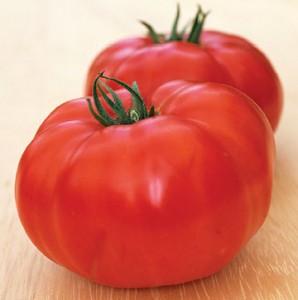
Beautiful, deep red fruit is quite large, weighing from 1 to 2 lbs. with dense, meaty flesh and extraordinary flavor. Instead of being a shy bearer like some large beefsteaks, the plants of Chapman are prolific, yielding plenty of these huge tomatoes. This wonderful heirloom variety will soon become a favorite among tomato gardeners. Indeterminate. 80 days.

Tomato Grandma Marys Paste

Grandma Mary’s Paste

This familiar heirloom variety has large, pointed red paste tomatoes that are meaty and flavorful, just right for cooking into sauce or chopping up for fresh use. Expect abundant harvests, as these plants are prolific. Indeterminate. 70 days.
Tomato Rosalita

Rosalita

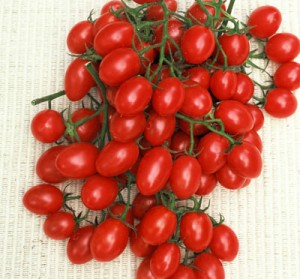
This is the only pink grape tomato we know of that is really the size and shape of a red grape tomato. Long clusters of small, oval fruit are deep rosy pink and abundantly produced on tall, vigorous plants. These tomatoes are as sweet as rosé wine, and a delightful new choice for anyone who likes grape tomatoes. Indeterminate. 60 days.

TomatoBigZebra

Big Zebra

A tomato that is red and green-striped is so unusual that it’s safe to say that you’ve probably never seen anything like it before. Although deep red and green outside, its interior is green with pink extending up into the middle. The appearance is striking and different. Fruit is medium to large with a mild, sweet flavor. Indeterminate. 85 days.
Tomato Copia

Copia

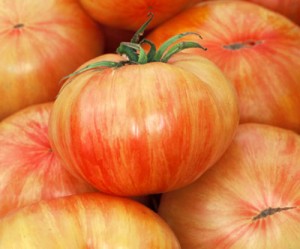
These very beautiful tomatoes are a stunning combination of fine-lined golden yellow and red stripes. While visually exciting, the real treat comes when you cut them open. Their gold flesh is streaked with red and is very juicy, flavorful, and sweet. A stabilized cross between Green Zebra and Marvel Stripe, these tomatoes weigh about one pound each, They were named in honor of Copia, the American Center for Food, Wine and the Arts, in Napa California. Indeterminate. 85 days.
Tomato Marvel Stripe

Marvel Stripe

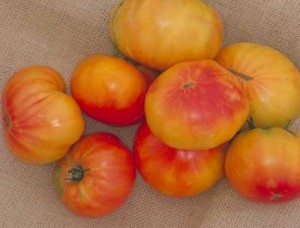
This heirloom variety has become one of gardeners’ favorite bicolored tomatoes because of its beauty, size, and taste. Large yellow-orange fruits are streaked with ruby red and have a sweet, fruity taste that is absolutely delicious. Tomatoes weigh about 1 lb., although they often become 2 lbs. or even more. Large harvests on vigorous vines. Indeterminate. 85 days.
Tomato Cherokee Chocolate

A free package of Cherokee Chocolate comes with the order

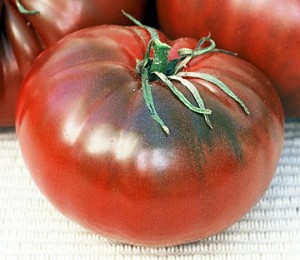
A stabilized version of Cherokee Purple, this 10 to 16 oz. mahogany-colored variety has excellent flavor and beautiful large fruit. Very productive plants are vigorous and yield a large harvest of these chocolate-colored tomatoes with the ample size and wonderful flavor associated with Cherokee Purple. Indeterminate. 75 days

This should get me in enough tomato trouble for 2013.  Some interesting varieties that will be new to our garden.

I encourage, NO I BEG, you all to order seeds from a safe source!

If you do not start your own seeds, please find a small local source that does! Please stay away from big box stores!  They are responsible for bringing in the blight that has hounded us here in New England.

Are you thinking about Tomatoes?

3/13/13

Started the first of the tomatoes today, 3/13/13.  It will take them 7-10 days to germinate and then they can spend 3-4 weeks here in the house in a southern window before they move out to a hoop house.

DSCN0768[2]

Decided to use peat pellets this year for the tomatoes.  Easier to plant and water and means the next “transplant” is just moving to a larger pot w/o disturbing the root system. When they are potted up I will bury some of the stem.

DSCN0770[1]

Peat pellets have swollen to full size and “swallowed” the seeds. Interesting the different seed sizes and colors between varieties.

DSCN0771[1]

Two trays planted today. Potential of ten plants each of ten varieties.  We are trying new varieties this year as mentioned and described above.  They will live here in this chair where it is warm (wood stove heat) until they germinate.

DSCN0773[1]

Once the tomatoes have germinated they will be moved to this unit in a South window at the top of the front stairs.  The unit will hold 8 trays of seedlings.  There is another window at the bottom of the stairs and a unit to go there as well.  The only two Southern windows in the house!  Hopefully, someday, a greenhouse of the South side of the attached barn.  Until then we use what we have:)

4

The Apple Arbor at Fayrehale

cropped-apples-4.jpg

Based on an example we saw in Colonial Williamsburg, we planted an apple arbor here at Fayrehale.  The greatest feature is the close planting of trees. Remember we are working on .6 acres (notice the point) on the edge of a picturesque Vermont village!  Or arbor consists of 32 semi-dwarf apple trees (2 each of 16 varieties). We did the high number of varieties because apple trees produce in cycles having off and on years with regards to production.  We figure this system will always give enough apples for two people!

DSC00006

Starting in 2005 we staked out the design. We wanted the apple arbor to be both a fruit producer and an architectural garden feature creating a pleasant transition from one garden room to another. We purchased the trees from E.C.Browns’ Nursery here in Vermont and had them do the planting. (Wedding Present  from Tom’s Mother) The main run is shown above. Stakes (and thus trees) are 3′ apart and space between rows is 8′ wide. There are three side “entrances”.  One on the left (goes to the raised bed vegetable garden) and two on the right (one goes to a small sitting area and the other to the small hoop poultry breeding pens.

DSC00010

Trees planted. This image  shows one of the two back “entrances” . Looking at the upper left you can see the “entrance” to and from the raised bed vegetable garden which has not been created yet!

apple arbor 4

Time passes and the trees grow. The curved metal arches are temporary “training” fixtures I used to wrap graft the trees into the arch.  The black metal arbor is at the entrance from the backyard.  It needs to be leveled and then we have flag stones to lay for a floor. We will lay clear plexi across the center top over where a table and chairs will be placed. There will be an old wood stove off to the left for evening fires.  There are grapes planted on the left columns . In the distance one of several sculpture by Alex Kovacs, an artist we admire for modern work.

As you can see from the lead picture, I have pruning to do. Need to get out and get it done soon.  Will try to accomplish it myself. If I am not successful I will call in our area apple expert  Todd Parlo, who developed, owns and runs Walden Heights Nursery & Orchard

3

Powered by WordPress. Designed by WooThemes